

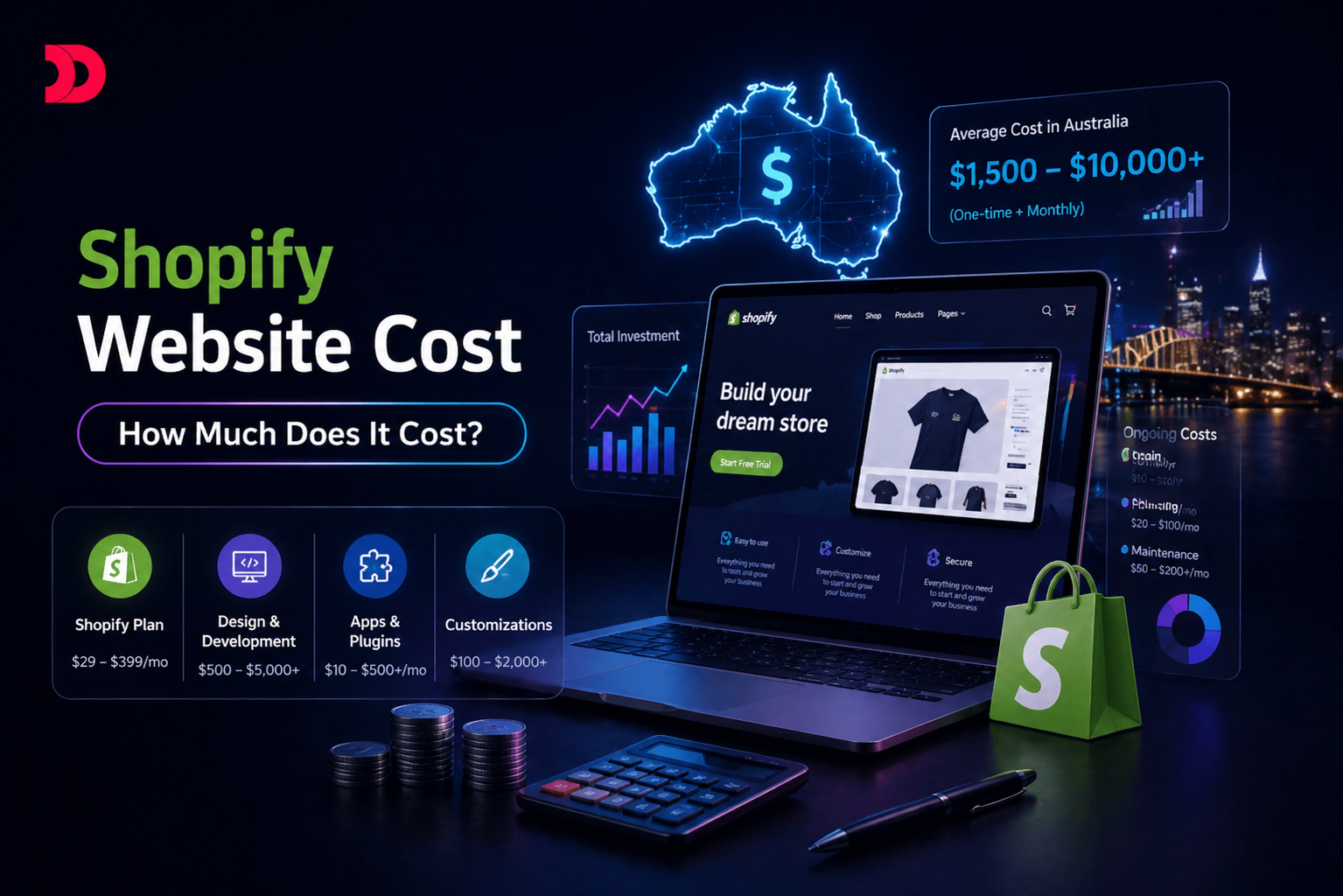
Understanding the real Shopify website cost in 2026 is one of the most important steps before launching an online store. Many business owners assume that Shopify pricing is limited to monthly subscription plans, but the total investment often includes design, development, apps, integrations, maintenance, and marketing.
Whether you are a startup, growing brand, or enterprise seller, your Shopify store cost depends on the features and scale you need. A basic store may require a small budget, while a conversion-focused eCommerce platform with automation and custom functionality can require a larger investment.
In this complete guide, we break down the factors influencing Shopify website pricing in 2026 and help you estimate the right budget for your business.
Several factors influence Shopify website pricing in 2026. Businesses today are no longer looking for only an online storefront—they need a high-performing sales platform that attracts visitors, converts them into customers, and scales with growth.
The cost is driven by user experience, branding, custom functionality, integrations, automation, and long-term business goals. A simple theme-based store will cost less than a custom Shopify ecosystem built for growth.
Customers expect fast-loading pages, smooth navigation, and easy checkout processes. Businesses invest in premium design and UX to improve conversions and customer retention.
Modern stores use automation for inventory, order processing, email marketing, and customer support. These tools improve operations but can increase setup and monthly costs.
Businesses planning long-term growth often invest early in scalable architecture, better analytics, SEO optimization, and conversion tools.
You May Also Like: 6 Emerging Shopify Development Trends for 2026
Many individual components determine the final cost of a Shopify website. From design choices to product volume, every decision impacts your budget.
Knowing these factors helps you plan smarter and avoid unexpected expenses during development.
A simple Shopify store with a few products and standard checkout is affordable. However, stores requiring advanced features like subscriptions, memberships, wholesale pricing, or custom product builders require more development time.
The more unique features you need, the higher the investment becomes. Complex stores also need more testing and maintenance.
Shopify offers free themes suitable for startups and basic stores. These are useful when budget is limited and branding needs are minimal.
Premium themes usually cost more upfront but offer better layouts, customization options, mobile responsiveness, and built-in features that save development costs later.
Businesses wanting a unique brand identity often choose custom design instead of standard templates. This includes UI/UX planning, wireframes, custom page layouts, animations, and branded visuals.
Custom design helps businesses stand out in crowded markets and improves trust with customers.
A store with ten products is much easier to build than a store with thousands of SKUs. Large product catalogs need better filtering, category structures, bulk uploads, and SEO optimization.
More landing pages, collection pages, and informational content can also increase setup time.
Many stores use tools for reviews, email marketing, CRM, shipping automation, loyalty programs, analytics, and upselling.
Some apps charge monthly fees while others need custom integration setup, increasing the total project cost.
Payment processing fees vary depending on country, payment provider, and Shopify plan. Businesses should calculate these costs carefully, especially at higher sales volumes.
Different business models require different Shopify budgets. The right cost estimate depends on what type of store you are launching and how advanced your needs are.
Below are common Shopify use cases and expected pricing ranges.
This setup is ideal for local brands, new startups, or first-time online sellers. It usually includes a standard theme, limited products, and basic pages.
Estimated Cost: $500 – $2,000
It is a smart option for testing products and entering the market quickly.
Dropshipping stores need supplier integrations, product imports, automation, and optimized product pages.
Estimated Cost: $800 – $3,500
The budget often includes apps for fulfillment, pricing automation, and order syncing.
Growing brands need stronger branding, improved UX, conversion optimization, and scalable systems.
Estimated Cost: $3,000 – $12,000
This type of store often includes premium themes, custom sections, advanced apps, and marketing integrations.
Large businesses require custom checkout experiences, B2B functionality, automation flows, and enterprise-grade scaling.
Estimated Cost: $15,000 – $100,000+
This is best for high-volume sellers and established brands.
Single-product stores focus heavily on storytelling, landing page design, and conversion optimization.
Estimated Cost: $1,500 – $6,000
Success depends more on branding and marketing than product count.
Choosing between a pre-built theme and a custom Shopify store is one of the biggest cost decisions. Each option has pros and cons depending on your goals.
Businesses planning long-term growth often benefit more from custom development.
Free themes are excellent for startups wanting a fast and affordable launch. They cover basic store functionality with minimal cost.
Premium themes offer stronger visuals, more customization, and built-in features that reduce extra app dependency.
Custom Shopify development costs more because every page and feature is tailored to your brand.
However, custom stores often deliver better conversions, stronger branding, and a more professional user experience.
Template themes can have limitations in speed and layout flexibility.
Custom development allows businesses to optimize page speed, checkout flow, user journeys, and advanced functionality.
As your store grows, templates may feel restrictive. A custom Shopify setup gives more room for expansion, integrations, and future features.
Businesses with growth plans usually save money long term through scalable development.
Many businesses budget only for design and launch but forget ongoing costs. These hidden expenses can significantly affect monthly profitability.
Planning ahead helps prevent budget surprises later.
Shopify charges monthly subscription fees based on the plan you choose for your store. Different plans offer varying features such as staff accounts, advanced reporting, shipping discounts, and lower transaction fees.
As your business grows, you may need to upgrade to higher-tier plans to support more operations and better analytics. Choosing the right plan is important to balance features with ongoing cost.
Many Shopify stores rely on apps for reviews, loyalty programs, subscriptions, email marketing, upselling, and automation. While these tools improve functionality, most premium apps charge recurring monthly fees.
A store using several paid apps can quickly build significant monthly expenses over time. It is important to review app ROI regularly and remove tools that are no longer necessary.
Payment gateways and processors deduct a fee from every order placed on your store. These charges may vary depending on the payment provider, region, and Shopify plan selected.
As sales volume increases, these fees can become a major operational cost. Businesses should include payment charges in pricing strategy and profit margin calculations from the beginning.
Shopify stores need regular maintenance to remain fast, secure, and fully functional. This includes theme updates, bug fixes, speed optimization, app compatibility checks, and performance monitoring.
Ignoring maintenance can lead to broken features, slower loading speeds, and poor customer experience. Consistent updates help protect revenue and improve long-term store performance.
Traffic does not come automatically after launching a Shopify store. Most businesses invest in SEO, Google Ads, Meta Ads, influencer promotions, email marketing, and content strategies to attract customers.
Marketing often becomes one of the largest recurring expenses, especially in competitive industries. A smart strategy helps control costs while generating better returns on ad spend.
You may have also like : How Much Does Laravel Development Cost in Australia?
Creating a clear budget framework helps businesses make smarter decisions before starting Shopify development. Instead of relying on rough estimates, it is better to calculate costs based on your actual business needs, growth plans, and technical requirements.
A structured approach gives better clarity, prevents overspending, and helps you prioritize the right investments from the beginning. Below is a simple framework to estimate your Shopify website cost accurately.
Start by identifying what your business needs from the Shopify store. Consider factors such as number of products, subscription models, custom checkout flow, wholesale pricing, multi-language support, or international selling.
The clearer your business goals are, the easier it becomes to estimate design, development, and monthly costs. Proper planning also avoids expensive feature changes later.
Decide whether your store will use a free Shopify theme, a premium theme, or a fully custom design. This decision has a major impact on your initial website budget.
Free themes are suitable for startups, while premium or custom designs offer stronger branding and better user experience. Choosing the right design path saves both time and money.
Choose only the apps and tools that are essential during launch. Many businesses overspend by adding too many unnecessary apps that increase recurring costs and slow website performance.
Focus first on important tools such as payment gateways, shipping systems, email marketing, analytics, or reviews. You can always add advanced features later as the business grows.
Next, decide who will build the store—your internal team, freelancers, or a professional Shopify agency. Each option comes with different pricing, timelines, expertise, and support quality.
Freelancers may be cost-effective for smaller tasks, while agencies often provide better strategy, design, development, and long-term support.
Do not focus only on launch cost. Monthly expenses are equally important for long-term profitability. Include Shopify subscription fees, app charges, maintenance, payment gateway fees, and marketing budgets.
A realistic monthly plan helps you manage cash flow better and ensures your store remains sustainable after launch.
Where you hire your development team significantly affects pricing. Businesses today compare local teams, freelancers, agencies, and offshore developers.
The right decision depends on quality, communication, and long-term value.
Building an internal team means salaries, tools, benefits, and management costs.
This option is expensive but may suit large companies needing dedicated resources.
Freelancers can be cost-effective for small projects and quick tasks.
Agencies provide structured delivery, designers, developers, QA teams, and long-term support.
Many businesses reduce costs by hiring experienced offshore teams from India and Asia.
This can provide excellent value when working with trusted companies like Devstree.
Choosing the cheapest option often leads to poor coding, delays, and expensive fixes later.
The best decision balances price, expertise, and reliability.
The Shopify ecosystem continues to evolve rapidly, and new technologies are changing how e-commerce stores are built, optimized, and priced. Businesses today are investing more in performance, automation, personalization, and scalable user experiences.
Understanding these trends helps business owners plan smarter budgets and choose the right development strategy. Below are the major trends influencing Shopify website costs in 2026.
Headless Shopify development separates the frontend design from Shopify’s backend system, allowing businesses to create highly customized shopping experiences. This gives brands more flexibility in design, speed, and omnichannel selling.
While headless commerce offers premium performance and scalability, it usually costs more than standard Shopify development because it requires custom frontend frameworks and advanced technical expertise.
AI-powered tools are becoming increasingly popular in Shopify stores. These tools can recommend products, personalize homepage content, automate email campaigns, and improve customer journeys based on behavior.
AI features often lead to better conversions and stronger customer retention. However, implementing advanced AI tools may require extra monthly software costs or custom integrations.
Most online shoppers now browse and purchase through mobile devices. Because of this, mobile-first design and fast checkout experiences are essential for modern Shopify stores.
Businesses are investing more in responsive layouts, one-click checkout flows, and speed optimization. These improvements increase conversions but can add to design and development costs.
Subscription-based business models continue to grow in industries such as skincare, food delivery, supplements, wellness, and lifestyle products. Recurring purchases help brands generate predictable revenue.
To support subscriptions, businesses often need dedicated Shopify apps or custom recurring billing systems. This adds both setup and monthly operational costs.
Automation tools help reduce manual tasks in order processing, inventory updates, customer support, and marketing workflows. Many Shopify businesses now use no-code tools to improve efficiency quickly.
Although some tools require monthly fees, automation can significantly lower long-term operating costs by saving time and reducing human error.
You May Also Like: Why Shopify is the Best ECommerce Website Development?
A Shopify store should not only look visually appealing—it should also generate steady and scalable revenue. Smart monetization strategies help increase profits without always depending on higher traffic or bigger ad spend.
Businesses that plan monetization from the beginning usually achieve better long-term growth and stronger customer lifetime value. Below are effective ways to maximize revenue from your Shopify store.
Upselling is one of the easiest ways to increase revenue from existing traffic. You can recommend premium versions, add-ons, accessories, or complementary products during the shopping journey.
Post-purchase offers and cart upsells help increase average order value without needing extra marketing spend. This strategy works especially well for beauty, electronics, fashion, and lifestyle products.
Subscription products create recurring monthly revenue and improve customer retention. Customers receive products regularly without needing to reorder manually.
This model is ideal for consumables such as skincare, supplements, groceries, pet food, and wellness products. Predictable recurring income also helps businesses forecast revenue more accurately.
Product bundles encourage customers to purchase multiple items together at a better perceived value. Bundles can improve sales volume while helping move inventory faster.
Cross-selling related products such as accessories, refills, or upgrades increases cart size naturally. These strategies are highly effective during checkout and product page browsing.
Shopify stores can generate additional income by promoting affiliate or partner products related to their niche. This allows businesses to earn commission without managing stock or fulfillment.
It is a smart monetization option for stores with strong audience trust or niche traffic. It can become a valuable secondary revenue stream over time.
Shopify can also be used to sell digital products such as courses, templates, downloadable guides, memberships, coaching sessions, or consulting services.
Digital products usually have high profit margins because there are no shipping or inventory costs. They are an excellent way to diversify income and leverage brand expertise.
Choosing the right Shopify development partner can reduce costs, speed up launch timelines, and improve long-term ROI. Devstree helps businesses build scalable Shopify stores focused on growth, performance, and conversions. We provide custom Shopify store development, theme customization, UI/UX design, and feature-rich solutions tailored to your products, customers, and business goals. Our team ensures every store is responsive, user-friendly, and built for future growth.
We also support businesses with app integrations, automation, speed optimization, and SEO to improve efficiency and online visibility. From CRM tools and subscriptions to shipping systems and analytics, we connect everything smoothly. Along with regular updates, maintenance, and scaling support, Devstree acts as your long-term technology partner, helping your Shopify store grow confidently and generate better results.
Build a scalable Shopify website with the right design, features, and eCommerce strategy for your business.
Start Your Shopify StoreThe real Shopify website cost in 2026 depends on your business goals, design expectations, feature requirements, and growth strategy. A basic store can launch with a modest budget, while advanced brands may invest heavily in custom development and automation.
The smartest investment is not always the cheapest option it is the one that creates the highest long-term return.
If you are planning to launch or scale your Shopify business, Devstree can help you build a high-performing store designed for growth, conversions, and long-term success.
The cost of a Shopify website in 2026 depends on your business requirements, design preferences, and features. A basic store may cost between $500 to $2,000, while a custom Shopify website with advanced functionality can range from $5,000 to $25,000 or more. Enterprise stores using Shopify Plus may require a much larger investment.
Monthly Shopify running costs usually include subscription fees, paid apps, transaction charges, maintenance, and marketing. Small stores may spend $50 to $300 monthly, while growing brands can spend $500+, depending on tools and advertising budgets.
A custom Shopify website is usually better for businesses wanting unique branding, better performance, advanced features, and long-term scalability. Pre-built themes are a good option for startups with smaller budgets, but custom stores often deliver stronger results over time.
Yes, businesses can reduce Shopify costs by starting with essential features, using a premium theme instead of a full custom design, limiting unnecessary apps, and working with experienced development partners like Devstree for cost-effective solutions.
Hiring Shopify experts saves time, avoids technical mistakes, improves store performance, and ensures your website is built for conversions. Professional teams like Devstree can help create scalable Shopify stores that grow with your business.


